



2026 is here, and email marketing is alive and kicking. More than that, it’s evolving! If you want to make the most of email as a channel, you need to evolve with it.
Over the past year, we have been closely tracking a wave of changes, some incremental, others truly foundational, spanning the entire email ecosystem. From design and development to deliverability, AI, and copywriting, email is shedding excess baggage and getting leaner, smarter, and more intentional. As Louise Feaheny at SMTP says, “The brands that succeed in 2026 are the ones sending the right emails, built on thoughtful strategy and strong infrastructure.”
What’s driving these shifts? A mix of technology, user behavior, regulations, and even politics.
Let’s start crossing things off the list, one by one.
Table of Contents
Email marketing predictions 2026: 9 practices going out of date
1. Batch-and-blast campaigns
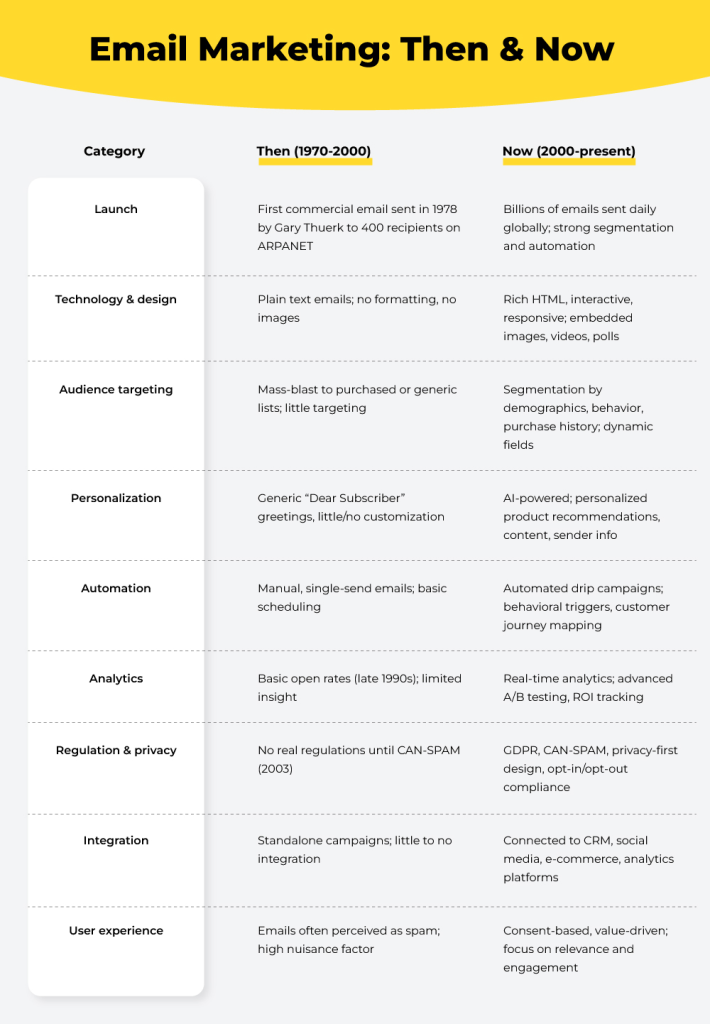
They were supposed to go obsolete a decade ago. But here they are, irrespective of the fact that treating every subscriber the same is penalized by both inbox providers and users:
- Batch-and-blast assumes identical intent, timing, and frequency for everyone.
- This approach sends weak engagement signals, hurting inbox placement.
- It drives higher unsubscribe and spam complaint rates.
- It ignores where subscribers are in their lifecycle journey.
Source: Mavlers
What replaces it are lifecycle-based, behavior-triggered journeys. This includes the following:
- Product-specific browse abandonment
- Post-purchase cross-sell and upsell
- VIP early access campaigns
- Win-back sequences based on inactivity windows
Instead of one large campaign, smart brands now run multiple micro-journeys. Each sends fewer emails but drives significantly more revenue.
2. Over-designed/image-heavy email templates
Over-designed, image-heavy emails are losing their effectiveness. What once looked impressive now creates more problems:
- They break across email clients and render inconsistently.
- They load slowly, especially on mobile networks.
- They are harder to scan and skim.
- They often fail accessibility standards.
- Visual appeal alone no longer guarantees effectiveness.
The old approach relied on multi-column layouts with large hero images, image-only CTAs, text baked into images, and decorative fonts with limited client support. These emails may look great in Canva and Figma, but perform poorly in Outlook, Gmail mobile, and dark mode.
Subscribers skim emails one-handed, on mobile, while distracted. They are not studying typography, spacing, or layouts as such. If the value and next step are not instantly clear, they leave.
What’s replacing them is a more practical, performance-driven model:
- Single-column layouts (preferably!)
- Live text CTAs
- Clear hierarchy from headline to value to action
- Reusable modules such as hero sections, product cards, testimonials, and CTA blocks
Look at it this way: Modern email templates feel closer to great landing pages, not posters. Need support with email design and development? Share your project brief with our email specialists. Our team designs and codes over 3,000 email templates every month, delivering scalable, production-ready builds across platforms.
3. Open rates as the master metric
Open rates have long stopped being a reliable way to measure email marketing success. Still, many brands obsess over opens as the primary metric. However, consider that:
- Open rates are artificially inflated by privacy protections.
- They are inconsistent across Apple Mail, Gmail, and Outlook.
- They no longer indicate real user intent.
- Optimizing subject lines strictly for opens leads to clickbait fatigue.
Intent matters more than visibility. Opens are a weak proxy for intent, and measuring success without looking at clicks, conversions, or revenue is short-sighted. Thus, what replaces this mindset is a deeper focus on engagement and overall business impact. As a brand, reconsider your performance benchmarks and focus on these metrics:
- Click-to-open rate (CTOR)
- Scroll depth, where available
- Conversions per email
- Revenue per subscriber
- Journey-level ROI
Fewer opens with real revenue beat high opens with zero ROI every time.
4. Token first-name personalization
First-name personalization is NOT going to make any difference to your subscribers because:
- Surface-level personalization signals automation, not genuine intent.
- Forced first-name subject lines are instantly recognizable.
- The content underneath is often generic.
- There is no connection to the user’s actual behavior or context.
- This approach can reduce trust instead of increasing engagement.
The future of email marketing lies in contextual and behavioral personalization:
- Subject lines based on real intent, not placeholders
- Recently viewed or browsed products
- Category-specific guides and comparisons
- Social proof relevant to the user’s interests
- Inventory-aware and timing-aware CTAs
Going forward, personalization should focus more on what the user is trying to do in the moment than on who they are. That said, first names still have a place. Stripping them out entirely in favor of pure behavioral signals can feel just as impersonal.
5. HTML-heavy, non-accessible emails
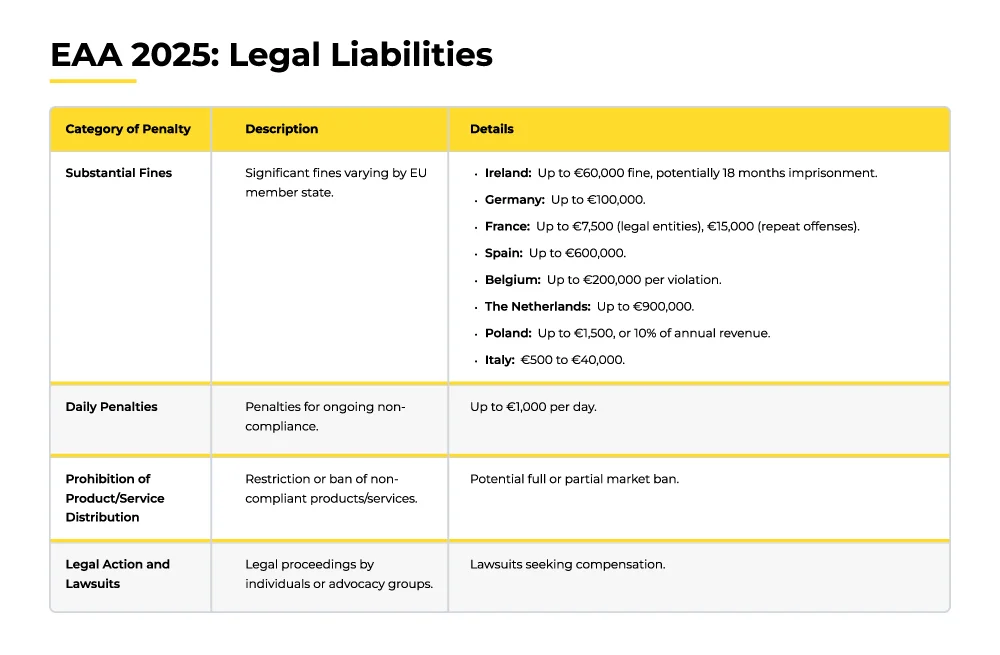
Ignoring accessibility is risky, to say the least. Here are a few reasons why to start with:
- Accessibility regulations are tightening across the EU, UK, and US.
- Poor HTML structure breaks screen reader experiences.
- Low contrast text, missing alt text, and image-only CTAs exclude users.
- Small fonts and tight tap targets hurt mobile usability.
- Brands that ignore accessibility risk compliance issues and brand damage.
Accessibility-first email design and development is one of your most important brand assets in 2026.
Accessibility-first includes:
- Semantic, standards-compliant HTML
- Logical reading and tab order
- Accessible color contrast
- Large, tap-friendly CTAs
- Dark mode-compatible designs
Source: Mavlers
6. Email in isolation
Customers do not think in terms of channels. They experience brands as a whole. In light of that, it’s important to consider that:
- Email that ignores recent SMS, push notifications, or in-app behavior feels disconnected.
- Repeating the same message across channels creates fatigue.
- Lack of coordination makes journeys feel generic and poorly timed.
- Disconnected messaging weakens trust and relevance.
What replaces it is cross-channel orchestration:
- Suppressing emails when an SMS has already been clicked
- Adjusting email messaging based on in-app activity
- Using email to reinforce actions taken in other channels, not to repeat them
In 2026, email is the anchor channel, not the only one. Which is why zero-party data strategies become so critical, as we’ll find out in a while.

7. Third-party data & sneaky tracking
Privacy expectations have shifted, and trust now determines long-term growth. In fact, according to some, geopolitics is now a product requirement. Consider also that:
- Consumers are far more privacy-aware.
- Platforms are increasingly restrictive.
- Regulations around data usage are stricter and more enforced.
- Opaque tracking methods erode trust and limit future reach.
Heavy pixel tracking and purchased third-party lists, along with behavior inferred without consent, no longer belong in the future of email marketing.
What replaces it is a zero-party and first-party data mindset:
- Explicitly asking users for their preferences
- Using quizzes, polls, and preference or profile centers
- Giving users control over content types and sending frequency
In 2026, trust is the real growth channel.
Since geopolitics is such a big factor these days, it is important to clarify shipping details, exchange costs, and related matters in your emails.
Where possible, build geopolitical buffers into delivery timelines.
Clearly communicate where goods are warehoused or friend-shored, since origin now directly affects tariffs and customer trust.
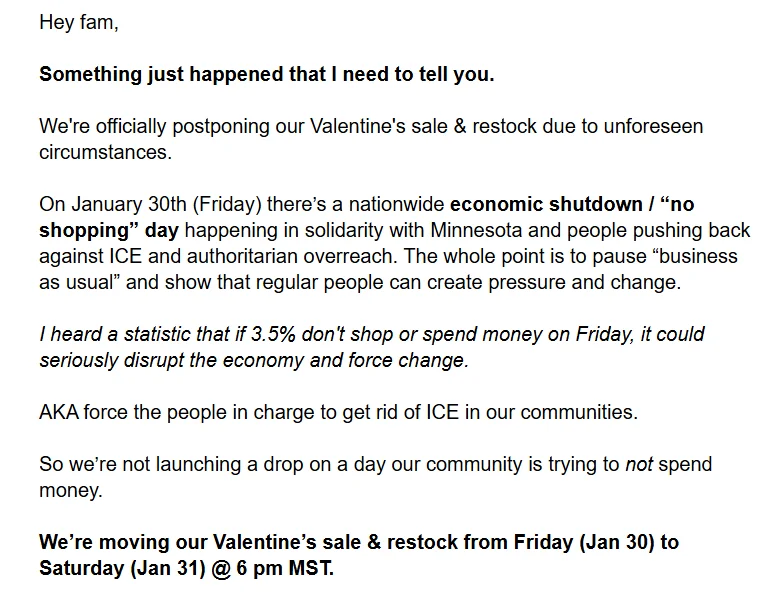
Clear information is a cornerstone of trust. How transparent and daring is a brand willing to be in order to reflect its core values? Consider a portion of a notification email from Hard Jewelry.
Source: Inbox
This is exactly how trust is built and sustained.
As we noted earlier, politics will shape email marketing in 2026 since it shapes your consumers’ reality, even though it might not affect you personally. (That said, politically charged emails must still follow the rules of segmentation.)
For more on zero-party data strategies, read our expert article.
8. AI slop
AI slop ruled the Internet in 2025. It is now easy to spot and even easier to dislike. So, if you think email marketing can succeed without a strong content brain behind it, you are mistaken:
- Strong copy reduces the need for heavy design. In the right hands, even a minimal email can deliver a memorable brand moment.
- Accessible email writing takes real craft, from clear language to meaningful alt text.
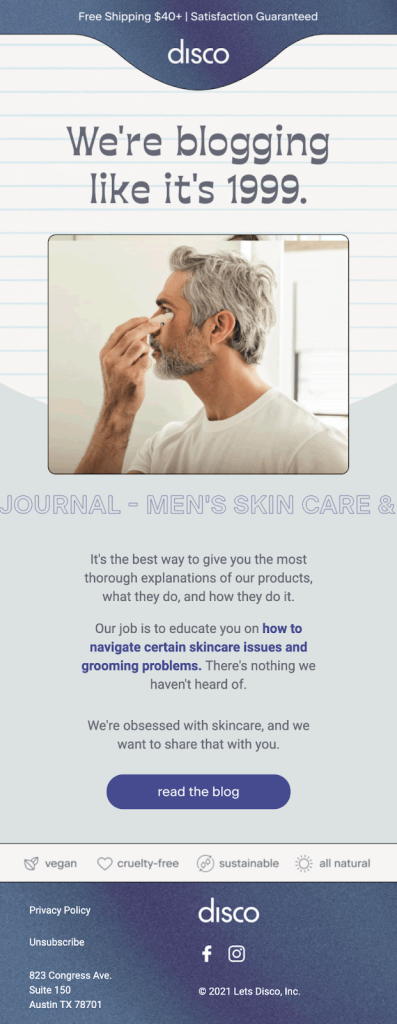
- Educational content, such as blogs and product explainers (see image below), loses credibility when it is filled with generic, bland content.
- Built-in AI tools in ESPs can assist, but relying on them alone is risky. The more sensitive or info-reliant your niche, the more essential skilled writers become.
Source: Chase Dimond’s newsletter
In 2026, great email content will be a true differentiator. That means:
- Enabling copywriters to work with R&D teams so they deeply understand the product or service before communicating it to customers.
- Using AI for speed, not as a substitute for final, publish-ready content.
- Creating alignment between content teams and leadership to strengthen brand authority.
Notably, one major advantage of strong, text-first email content is discoverability. As AI tools like Gemini increasingly surface inbox results faster and more intelligently, emails with clear, live text are easier to find when users search their inboxes. If your content is weak or locked inside images, Gemini cannot properly parse it, and your emails are far less likely to appear when users search for topics your competitors also cover in their emails.
This is something that Beth O’ Malley calls search inbox optimization (SIO).

9. No-reply
Julie Stuck, Sr. Email Strategist at Validity, says, “Microsoft hinted at this [no-reply] in their bulk sender updates last spring and ‘strongly recommends’ allowing two-way communication.”
Emails like these will be a serious liability going forward.
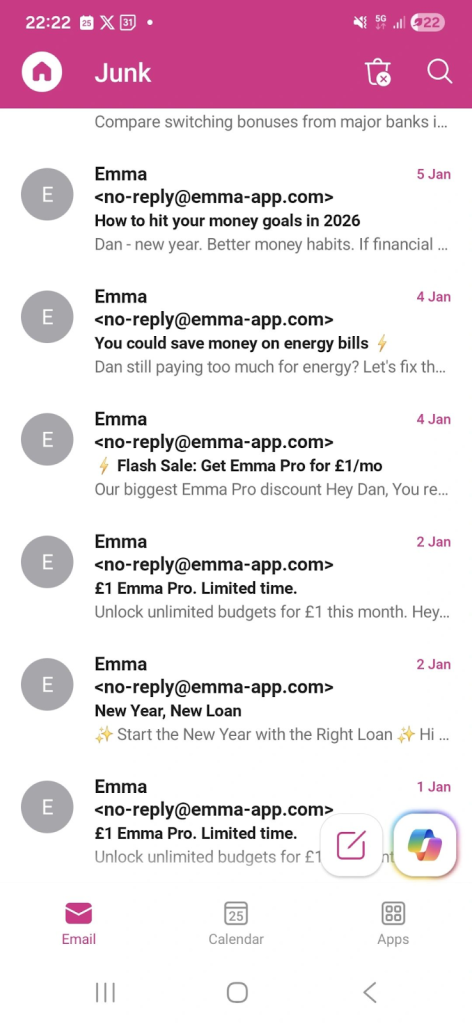
Relationship-building sits at the core of email marketing, more so than any other digital channel. That is why 2026 may mark the end of the no-reply email address:
- Mailbox providers increasingly reward two-way communication. When your subscribers reply, it signals value and improves sender reputation.
- No-reply addresses are often associated with bulk blasting. When users cannot reply to opt out or complain, they are more likely to hit “Report Spam.”
- A no-reply address feels impersonal at best and suspicious at worst.
- Every no-reply email closes the door on valuable zero-party data and customer insight.
Major inbox providers are tightening their quality standards. In response, Salesforce is pushing toward two-way communication through agentic AI.
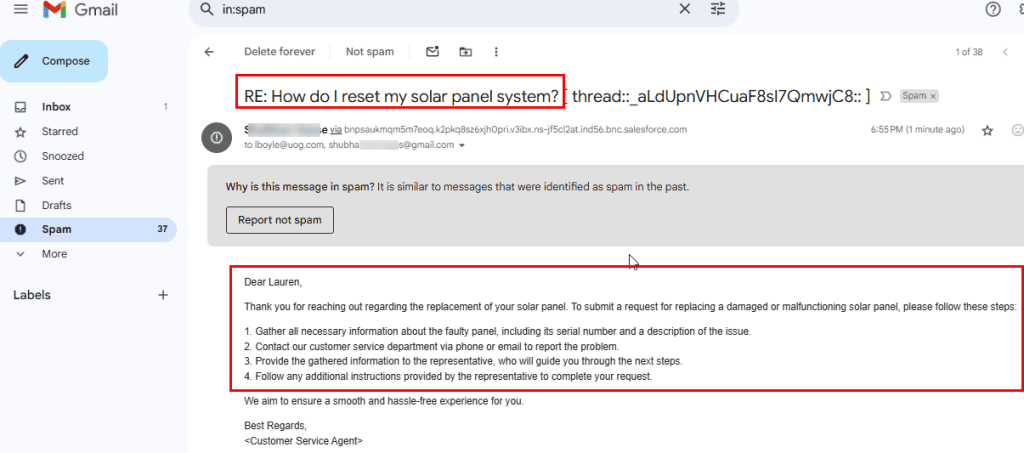
Source: Salesforce FAQs
“A customer could reply directly to the email with, “I like those pants, but do you have them in blue?” and Agentforce, acting as a personal shopper, would respond with available options, check inventory, and even help complete the purchase. This transforms a static campaign into a dynamic, personal shopping experience,” notes Nathan Bouman, SFMC consultant.
Looking for Salesforce Marketing Cloud experts? Share your brief with us. We’ve supported over 800 SFMC clients over the past 10+ years.
Own the future of email marketing with Mavlers!
2026 is shaping up to be a ‘leap year’ for email marketing.
Rarely has the channel evolved this quickly or across so many dimensions at once. As you plan ahead, keep these shifts in mind:
- Email programs now require far greater operational maturity. Brands must move beyond channels and think in terms of cumulative customer experience.
- Geopolitical and regulatory uncertainty will directly influence email strategy, making email the primary channel for clear updates, transparent policies, and agentic support.
- Deliverability and usability will matter more than visual embellishments.
- Success will be judged by downstream business impact, such as conversions, subscriber value, and journey ROI, not vanity metrics.
If you need any help with email marketing, connect with us!