


Where Salesforce Is Really Headed: Lightning, Agents, and the AI-First Org
Salesforce architect and 21x-certified trailblazer Shiva Sheeba unpacks how Lightning is evolving into an "invisible," conversational layer powered by Slack, Agentforce, and low-code/no-code tools-and what that means for admins, devs, and architects over the next 2-5 years. She also talked about the real takeaways from Dreamforce 2025 (beyond the hype), how to measure AI with impact metrics like resolution rate, CSAT and collaboration uplift instead of vanity stats, why 9 out of 10 AI pilots stall out, and how to onboard agents like digital teammates with guardrails, governance, and a 90-day ramp so they actually make it to production.
Meet the Speakers

Read Interview
Sheeba Thukral <> Alok Jain
Alok Jain:
Hey, good afternoon everyone. If you have ever wondered where Salesforce is headed - how AI, automation, and low code are reshaping the way teams build - you are in the right place.
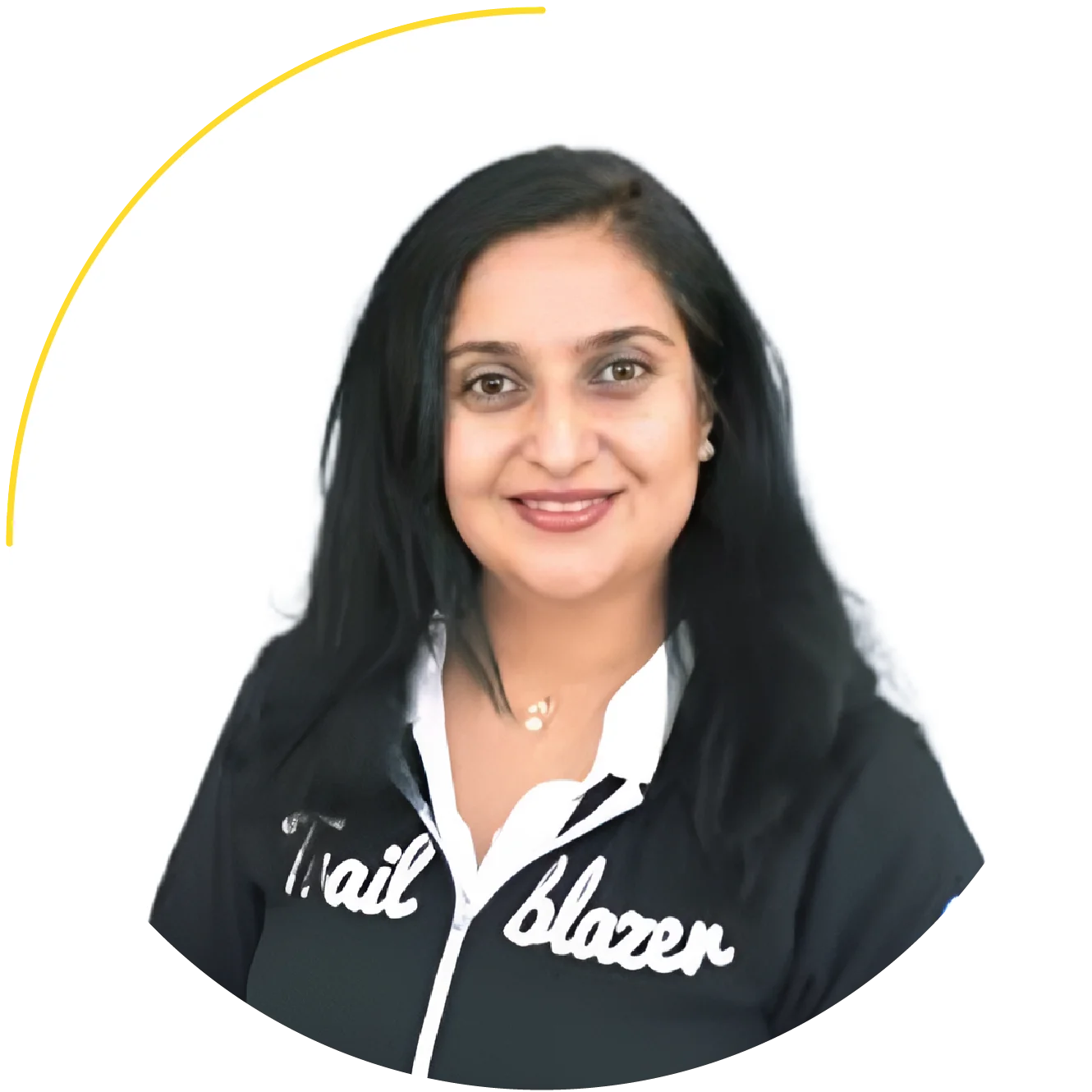
Today we are joined by Sheeba, who is a 21-time Salesforce Certified Solutions Architect and a three-time Dreamforce speaker. Sheeba has helped several organizations simplify complex Salesforce setups and stay ahead of the curve.
Sheeba, you've become such a well-known voice in the Salesforce ecosystem - not just for your technical expertise, but for helping audiences understand what's next. Today I want to focus on the future - from how Lightning is evolving to how Einstein Analytics and AI are changing the way we work in Salesforce. I'm really excited to have you here.
Sheeba:
Thank you very much.
Alok Jain:
Sheeba, Salesforce is evolving faster than ever - with more automation, AI, and a real shift toward low-code and no-code development. A few years ago, teams were still asking if Lightning was ready. Now it's the foundation everyone builds on.
How do you see Salesforce Lightning evolving in the next two to five years, especially with the rise of low-code platforms? And what will that mean for how admins and developers work together?
Sheeba:
Thanks for the question. This year I had the good fortune to attend Dreamforce 2025, and during the Slack keynote, Parker Harris - the CTO at Salesforce - mentioned that Salesforce Lightning is undergoing a fundamental transformation, and that you may never log into Lightning. That is his goal.
The vision doesn't signal decline. Rather, it represents Lightning's evolution into an invisible, conversational-first platform. Salesforce is re-engineering all of Salesforce to be Slack-first - making CRM interactions as simple as talking in Slack rather than navigating traditional interfaces.
Sales, IT, service, Tableau, HR - every cloud - will adopt this conversational approach powered by Agentforce and natural language interactions. Users will engage with Lightning's capabilities through dialogue instead of clicking through forms and pages.
As developers, we've traditionally done a lot of backend work - customizing Lightning pages in form-based formats. But now, through Slack, we can simply give instructions like "create an opportunity" or "update an opportunity," and agents will execute them. This is low-code/no-code acceleration.
By 2025, 70% of commercial applications are expected to use low-code or no-code solutions, and Lightning is the epicenter of this shift.
Key developments include Agentforce Vibes - what I like to call a developer brahmastra. It enables non-technical users - people who don't code or know LWC - to build Lightning Web Components, Apex code, and flows using natural language. At Dreamforce, I created an app using Agentforce Vibes in five minutes - and even earned a T-shirt for it.
Enhanced Flow Builder now supports rich text inputs, time fields, and multi-object data shapes - allowing admins to automate complex processes without coding. Citizen developers are empowered through governance frameworks that balance innovation with security, ensuring these automated tools respect org security settings.
The Lightning Web Runtime represents the architectural future, delivering 25% faster load times than legacy frameworks. Enhanced local development with real-time preview will accelerate development cycles. Migration from Aura to LWR will become a strategic priority.
Agentforce integration will fundamentally reshape Lightning by 2030. Administrators will configure environments through AI-driven natural language commands - a transformation showcased at Dreamforce through customer examples like Williams-Sonoma, Dell Technologies, and Engine.
The 2030 vision is Lightning evolving into a conversational-first, hyper-personalized platform where traditional navigation becomes secondary. Data Cloud and Einstein AI will deliver tailored experiences, with Lightning acting as the unified experience layer across Salesforce clouds. Cross-cloud orchestration will position Lightning as the presentation layer for distributed data and processes.
Challenges remain - governance complexity, migration burdens from Classic to Lightning and Aura to LWR, and AI transparency and trust. The paradox is that Lightning becomes invisible precisely as it becomes more powerful.
By 2030, Lightning will function as an invisible enabler of work - whether through Slack conversations, embedded agents, or external applications like Experience Cloud.
Alok Jain:
That's a very detailed perspective - thank you. I'm sure our listeners will appreciate that.
You touched on Dreamforce - such a fascinating event for Salesforce professionals worldwide. It always brings a flood of updates, and sometimes it's hard to tell what's hype versus what's real.
You attended Dreamforce 2025 and have spoken at previous ones. What stood out most to you this year, and how will those announcements shape Salesforce usage in the coming year?
Sheeba:
Dreamforce 2025 firmly established Salesforce's vision of the agentic enterprise - where intelligent AI agents collaborate with humans to transform business processes across sales, service, marketing, and operations.
At the center is the Agentforce 360 platform. Key themes were Agentforce 360, agentic enterprise, Data 360, Customer 360, and Slack.
From an admin perspective, Salesforce introduced setup powered by Agentforce - a conversational AI assistant that simplifies org management and drastically reduces time spent troubleshooting permissions. You can ask why a user cannot see an object, and the agent will troubleshoot.
Flow enhancements and approval orchestration empower admins to automate complex processes. For developers, Agentforce Vibes converts natural language prompts into scalable Apex and Lightning components, supported by Model Context Protocol tools for seamless integration.
The Agent Script language introduces hybrid reasoning for enterprise compliance. Architects saw renewed focus through the Well-Architected Framework and tools like Apex Guru and Scale Center.
Community engagement was strong - sessions, Trailblazer Forest experiences, nonprofit tracks, and Dreamfest celebrations. Partners benefited from expanded ecosystem support and strategic AI partnerships with OpenAI, Anthropic, and Google.
Overall, Dreamforce positioned Salesforce as a leader in the AI-powered enterprise era. The message was clear: AI elevates human potential - it does not replace humans.
Alok Jain:
Looks like you had a great time at Dreamforce.
Let's talk AI metrics. Many organizations measure success only through cost or time savings - but real value shows up in user experience and smarter decisions.
What metrics should teams use to measure AI impact beyond efficiency?
Sheeba:
Most AI metrics are misleading because they measure activity, not impact. Shuffling papers faster doesn't equal solving problems.
Vanity metrics - like total interactions or response time - create the "unpaid intern trap," where AI appears busy but adds little value.
Instead, focus on resolution rate - how many issues AI resolves without human intervention - and user satisfaction metrics like CSAT or NPS. These reflect real impact.
Avoid metrics that prioritize volume over quality. The goal is collaboration amplification - AI elevating humans by offloading repetitive work and enabling strategic focus.
We must redefine success: measure meaningful progress, not just activity.
Alok Jain:
There's a statistic that nearly nine out of ten AI pilots never reach production. Why do so many stall out?
Sheeba:
Successful organizations treat AI agents as teammates - not plug-and-play tools. They require onboarding, context, and coaching.
Failures stem from the "set-and-forget" trap, yak shaving - focusing on tools instead of problems - and poor data quality.
Fear and overconfidence - the "lizard brain effect" - also derail pilots. The solution is controlled imperfection: start small, iterate, and improve.
Adopt a digital onboarding model: agent bootcamp, supervised learning, then autonomy with guardrails. Cross-functional AI squads ensure alignment.
Ultimately, AI success depends on strategy, discipline, and human guidance - not technology alone.
Alok Jain:
That was an insightful look at where things are headed. It truly feels like we're just scratching the surface.
Thank you for giving us a glimpse into what's next in Lightning, AI, and Salesforce. We really appreciate your time.
Sheeba:
Thanks very much for having me. Have a great day.